Azolla Farming in Kenya 2025: Sustainable Feed and Soil Enrichment for Smallholder Farmers
Posted in :

Azolla farming in Kenya is gaining attention as a low-cost, eco-friendly solution for livestock feed and soil fertility. As input costs rise and climate challenges grow, many smallholder farmers are turning to this fast-growing aquatic fern to supplement animal feed, enhance crop yields, and boost overall farm sustainability.
What Is Azolla?
Azolla is a free-floating freshwater fern that grows rapidly under the right conditions. It forms a dense mat over still water and contains high levels of protein—20% to 30% dry weight, making it an ideal supplement for:
- Chickens
- Pigs
- Dairy cows
- Fish (especially tilapia)
It also fixes nitrogen, making it an effective biofertilizer that improves soil productivity naturally.
Why You Should Consider Azolla Farming
- High Protein Content: Rich in amino acids, vitamins (A, B12, beta carotene), and minerals.
- Rapid Growth: Can double its biomass every 3–5 days under ideal conditions.
- Reduces Feed Costs: Cuts commercial feed expenses by up to 30–40%.
- Improves Soil Fertility: Works as green manure and biofertilizer for vegetable and rice farmers.
- Climate-Friendly: Absorbs CO₂ and doesn’t require synthetic fertilizers.
Ideal Conditions for Azolla Cultivation in Kenya
| Factor | Requirement |
| Temperature | 20°C – 30°C |
| Water pH | 5.5 – 7.5 |
| Light | Partial sunlight (50–70%) |
| Water Depth | 5–12 cm |
| Shelter | Shade net or banana trees overhead |
Regions such as Kiambu, Murang’a, Kisii, Embu, and Kakamega provide favorable conditions for azolla farming.
How do I make millions from tomato farming? Find out now
How to Grow Azolla: Step-by-Step Guide
1. Setting Up the Pond
You can grow azolla in:
- Earthen ponds
- Cement tanks
- Polythene-lined pits
- Basins or containers (for small-scale use)
Standard pit size:
1.5 m × 1.5 m × 0.3 m depth (lined with plastic sheet)
Setup Instructions:
- Add 10–15 kg of cow dung mixed in 10 liters of water as a nutrient starter.
- Add 10–15 g of superphosphate or bone meal.
- Fill the pit with clean water (no chlorine or detergent).
2. Inoculation
- Introduce 500–1,000g of azolla starter culture.
- Let it grow and spread—takes 5–7 days to cover the pond surface.
3. Maintenance
- Maintain water level regularly.
- Add cow dung slurry every 7 days.
- Remove and compost any weeds or decayed matter.
- Harvest 50–70% of the azolla every 3–5 days to prevent overcrowding.
Harvesting Azolla
Use a plastic sieve or net to scoop azolla from the pond.
- Feeding livestock: Wash with clean water to remove smell and feed fresh or sun-dry for later use.
- For crops: Use harvested azolla directly as mulch or mix into compost.
Feeding Guidelines
| Animal Type | Fresh Azolla Amount Per Day |
| Chickens | 20–30 g per bird |
| Pigs | 1–1.5 kg per pig |
| Dairy Cows | 1–2 kg per cow |
| Fish (tilapia) | 10–15% of total daily feed ration |
Azolla can replace 20–30% of conventional feed with no negative effects on growth or productivity.
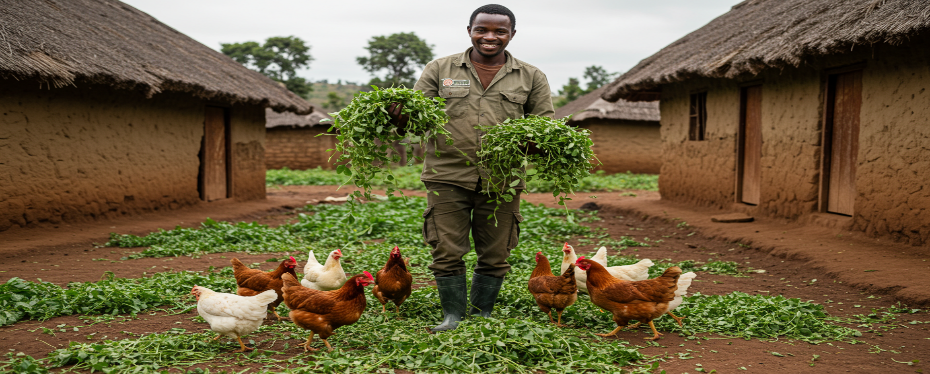
Fig 1: A farmer feeding Azolla to chickens
Common Problems and How to Solve Them
| Problem | Solution |
| Water turns green | Caused by algae; change water and reduce direct sunlight |
| Yellowing of azolla | Add cow dung slurry or phosphate to restore nutrients |
| Foul smell from pond | Remove decayed azolla, change water, and reduce crowding |
| Pest attack (snails, insects) | Introduce mesh barriers or natural repellents |
How Profitable Is Azolla Farming?
- Low input cost: One-time setup with minimal maintenance
- High return: Reduces feed costs by up to 40% in poultry and pig farming
- Daily harvests: Can yield 1–2 kg per square meter per day
Even a small 3m × 3m pond can support 100–200 chickens or supplement feed for 2–3 dairy cows.
What You Need to Start
- Clean water source
- Shaded area or shade net
- Starter culture (can be sourced from existing farmers or agro-vets)
- Cow dung or compost
- Simple tools (bucket, sieve, watering can)
Frequently Asked Questions
Q: Where can I get azolla starter in Kenya?
A: You can source it from local agro-dealers, aquaculture groups, or connect with nearby farmers practicing azolla farming.
Q: Can azolla grow without cow dung?
A: Yes, but growth will be slower. Cow dung provides essential nutrients. Compost tea or diluted poultry manure can be alternatives.
Q: Can azolla be dried for long-term storage?
A: Yes. You can sun-dry azolla and grind it into powder or mix with bran as livestock feed.
Q: How long does it take to start harvesting?
A: About 7–10 days after inoculation, you can begin regular harvests.
Onion farming the smart farmer way. Find out more
Final thoughts
Azolla farming in Kenya offers a practical, affordable, and sustainable solution for farmers looking to lower feed costs, improve soil fertility, and adopt climate-smart farming methods. It is well-suited for both rural and peri-urban farmers, especially those raising poultry, pigs, dairy cattle, or tilapia.
With the growing need for sustainable agriculture, 2025 is the perfect time for Kenyan farmers to embrace azolla as a valuable asset on the farm.